
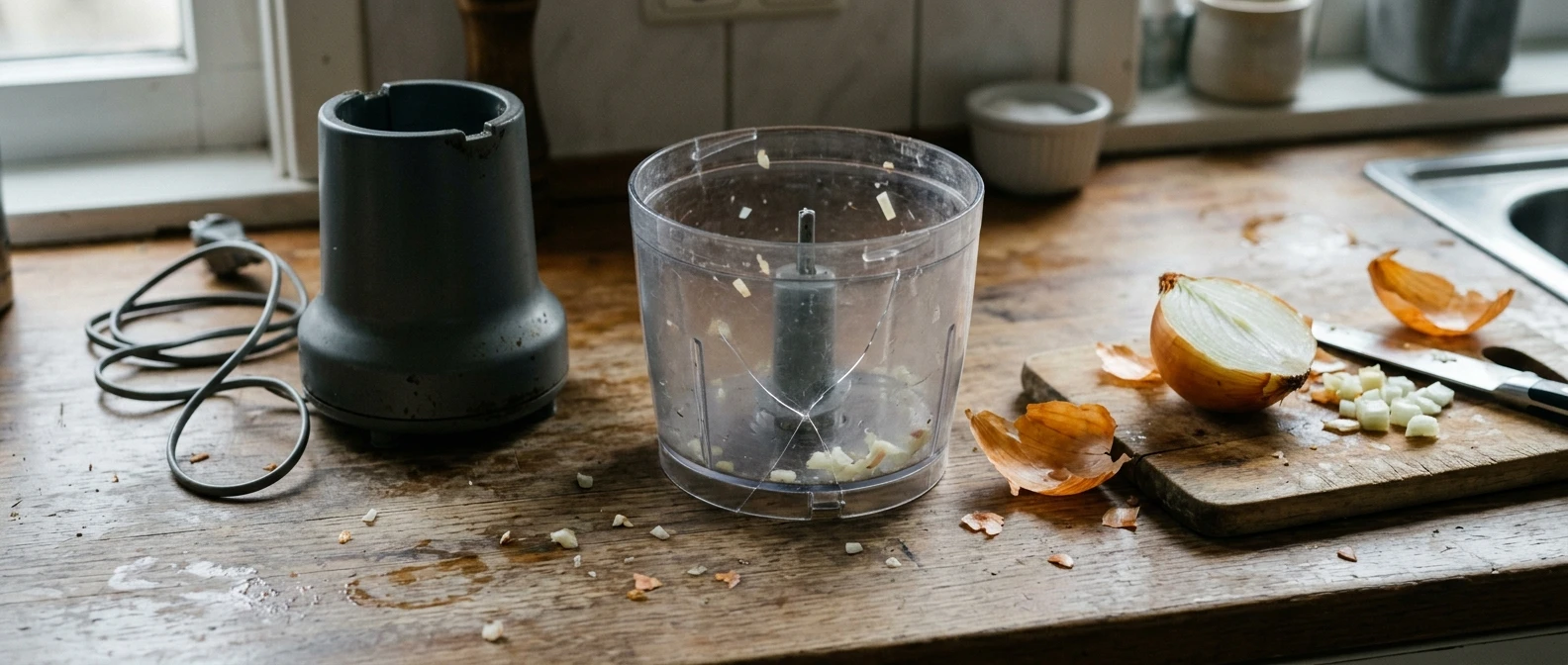
If you’ve ever read a one-star review that says “worked great for one onion, then died,” you already know the risk with cheap electric choppers. The motor stalls, the bowl cracks, or the blades go dull before the second week. This guide shows how to choose an electric vegetable chopper that holds up, using five things that decide durability and a short list of listing features you can ignore.
Do you actually need an electric chopper?
An electric chopper earns its counter space if you chop the same kinds of vegetables over and over. Onions, peppers, celery and carrots for soups, sauces and salsa are the classic case. It also helps with meal prep, when you’re dicing a whole bag of something and your wrists are done before the bag is.
Keep the knife if most of your cooking involves a single clove of garlic, half an onion or a sliced tomato. Setting up, chopping and washing a machine takes longer than the job itself. A chopper also can’t give you the clean, even slices of a good knife. It cuts by spinning blades through whatever is in the bowl, so the results run from coarse to mush depending on how long you run it.
Motor and power: corded vs rechargeable
The motor is the part most likely to fail, and it is the hardest to judge from a listing. Start with the power source, because it changes how the chopper behaves in daily use.
Pick a power source for the jobs you do
Corded
Good fit for: Heavier jobs like carrots, celery, and dense onions.
Trade-off: It needs a nearby outlet, and the cord can get in the way.
Rechargeable
Good fit for: Smaller or softer jobs like onions, garlic, and herbs.
Check first: Battery life per charge and whether the battery can be replaced.
Corded models plug into the wall and deliver steady power. They suit heavier jobs like carrots, celery and dense onions, where a weak motor bogs down. The trade-off is that you need an outlet near your prep space, and the cord gets in the way.
Rechargeable models are cordless, usually charge over USB, and are easy to move around the kitchen. They are fine for soft or small jobs like onions, garlic and herbs. Two things to check before buying:
- Battery life per charge. Look for a stated number of uses or minutes. If the listing never mentions it, assume it’s short.
- Whether the battery can be replaced. On many small appliances it’s sealed in. When the battery wears out, the whole chopper goes in the bin.
Wattage is worth reading, but with caution. A listing that shows one clear wattage figure is more useful than one that shouts about “peak” power. If you can’t tell what the motor actually does continuously, treat that as a warning.
Also look for two basics: a pulse button, which lets you control how fine the chop gets, and a note about running time. Many choppers should only run in short bursts, and a product that says so is being straight with you.
Blades: what to look for so they stay sharp
Blades do the work, and they are where cheap choppers cut corners. What you want to see in the listing:
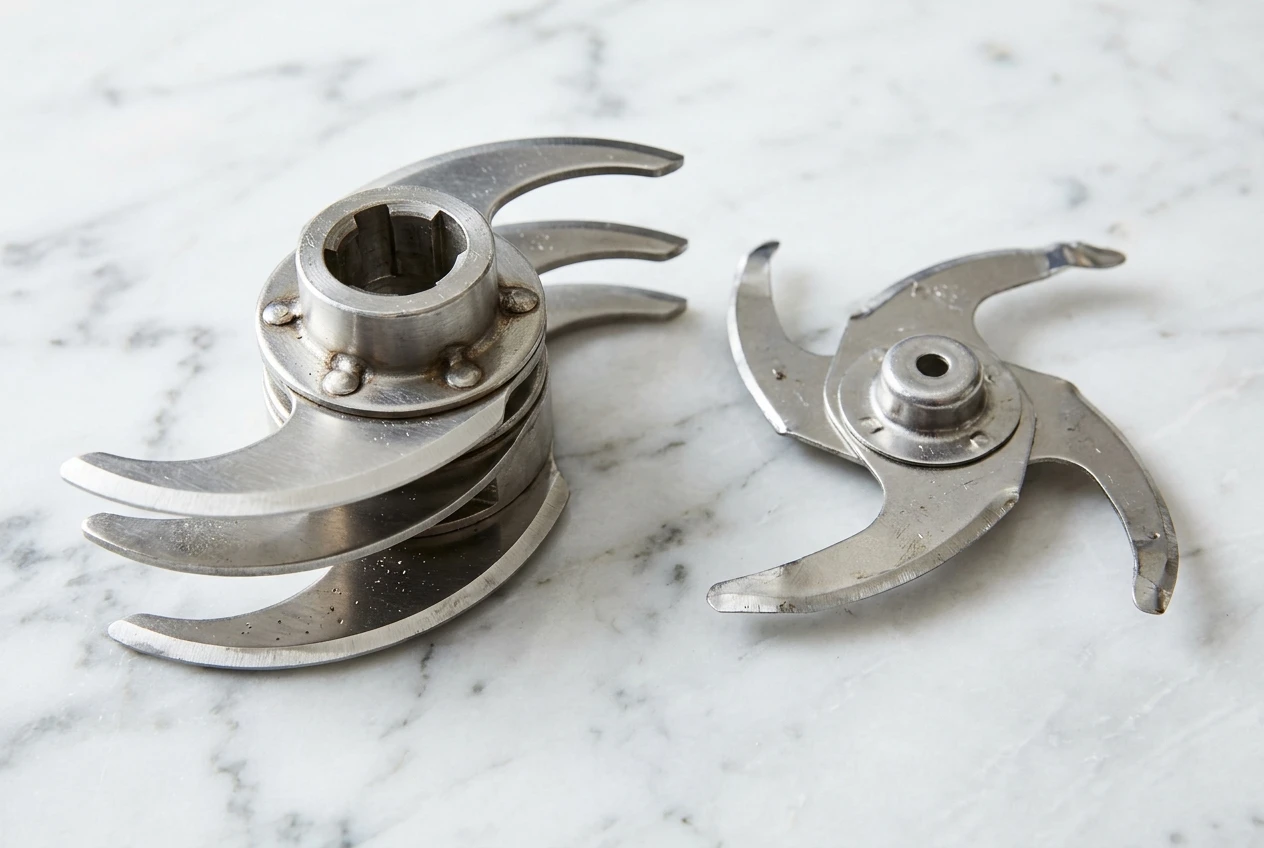
- A named material. Stainless steel is the standard to look for. “Premium metal” or “sharp alloy” tells you nothing, and a seller that won’t name the material probably doesn’t want you asking.
- Thick, solid blades. Thin stamped blades bend and dull faster, especially against carrots and other hard vegetables. Photos of the blades up close help. They should look substantial, not like folded tin.
- A secure hub. The blade assembly should seat firmly on the shaft. Wobble there leads to uneven chopping and a stressed motor.
- Removable blades. This matters for cleaning too, which we’ll get to below.
Blade count is a marketing number. More blades don’t chop better. A well-made two- or three-tier blade set does the job, and a chopper with six thin blades crowded together mostly adds drag for the motor.
One habit extends blade life with any model: cut hard vegetables into rough chunks before they go in, and don’t run the chopper on frozen food unless the listing explicitly says it can. Whole carrots and ice-hard produce are the quickest way to dull blades or burn out a small motor.
Bowl and lid: glass vs plastic, and the locking details
The bowl is the second most common failure point, and the first thing buyers see cracked in photos.
Glass bowls don’t stain and don’t hold onto garlic or onion smells. They feel solid and are easy to see through. They are heavy, and they can break if dropped or hit hard. Check that the listing says tempered or heat-resistant glass, and handle it carefully.
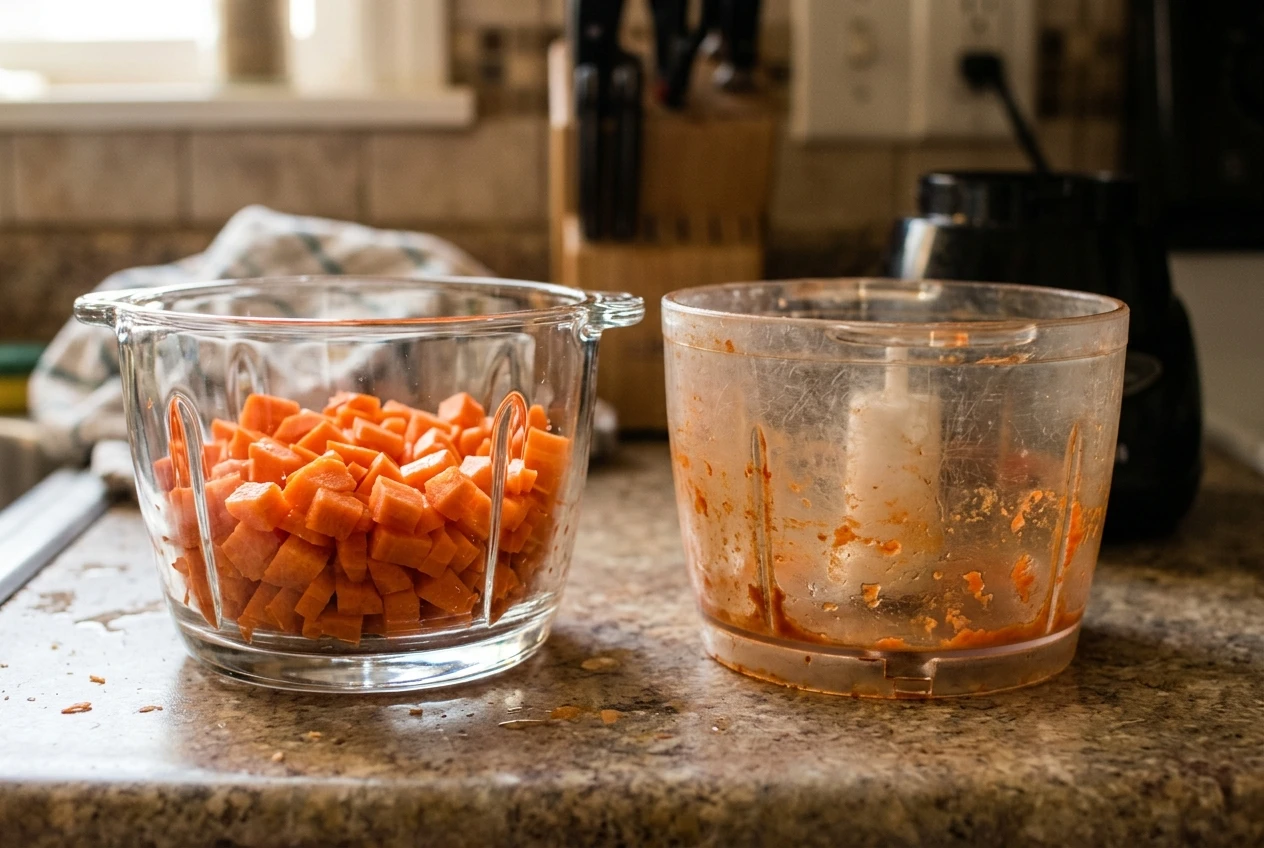
Plastic bowls are lighter and survive a drop better. Cheap plastic is the problem: it can crack at the base where the motor torque concentrates, stain from tomatoes and carrots, and go cloudy over time. If you choose plastic, look for a thick wall and a named material rather than just “BPA-free,” which is a statement about what’s left out, not about how well the bowl is made.
Neither material wins automatically. Glass suits people who want something durable for daily use and will be careful with it. Plastic suits people who want light weight and worry about drops.
Choose the bowl material that fits your kitchen
Glass
Upsides: It does not stain or hold garlic and onion smells, and you can see through it.
Trade-off: It is heavier and can break if dropped or hit hard. Check whether it is tempered or heat-resistant glass.
Plastic
Upsides: It is lighter and handles drops better.
Trade-off: Cheap plastic can crack, stain, or become cloudy. Look for a thick wall and a named material.
The lid and the lock
The lid matters more than most buyers think. Look for these details:
- A lock or safety interlock. The motor should only run when the lid is properly seated and locked. This protects your fingers and keeps the lid from popping off under load.
- A tight seal. A loose lid leaks and flings bits of onion around the counter.
- A sturdy latch or twist mechanism. If the photos show a thin plastic clip, expect it to be the first thing that snaps.
- A base that fits the bowl cleanly. Gaps between the bowl and motor base let liquid creep into places it shouldn’t.
Size and capacity: match it to how you really cook
Capacity is usually listed in cups or milliliters, and it describes the brim of the bowl, not how much you can chop at once. Plan on using only about half to two-thirds of the stated volume. Overfilled bowls chop unevenly and strain the motor.
A rough way to match size to your kitchen:
- Cooking for one or two: a small bowl is enough, and it’s easier to store and wash.
- A family or batch cooking: look for a larger bowl so you aren’t running three rounds for one pot of soup.
- Mostly onions and herbs: a compact model will do. You gain little from a large one.
A bigger bowl isn’t automatically better. A large chopper used for small jobs spreads the food thinly across the bottom and chops it unevenly. Pick the size you’ll fill most of the time, not the one you’d need at a holiday dinner.
Cleaning: the dealbreaker most buyers ignore
A chopper that’s a chore to wash ends up in a cupboard. Check these points before you buy:
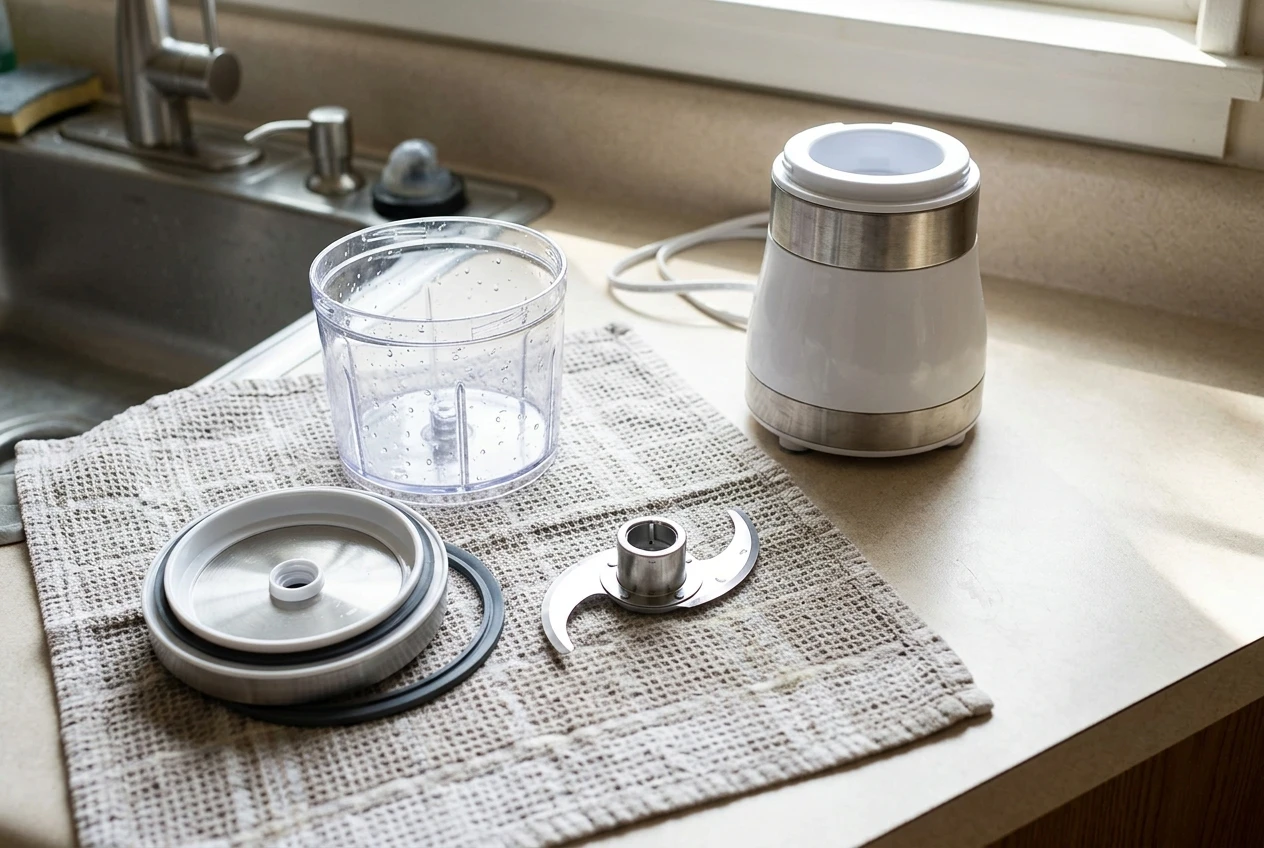
- Removable blades and parts. Blades fixed to the bowl are hard to clean around and hard to dry.
- Dishwasher-safe parts. Look for this on the specific parts you’d put in the machine: bowl, lid and blades. A vague “easy to clean” line is not the same thing.
- A motor base that stays dry. The base never goes under water. Check that it wipes clean and has no deep crevices where food collects.
- Handling the blades safely. They are sharp even when they’re dull enough to disappoint you. A design that lets you rinse them without gripping the cutting edge is a plus.
Also consider smell. Plastic can hold onto onion and garlic for a long time, and a lid with deep grooves in the seal can trap residue. If the listing photos show a lid with many small channels, assume it takes some scrubbing.
Reading Amazon and eBay listings
You can learn a lot about durability in two minutes by reading listings the right way.
Reviews to read first
- Sort by lowest rating and read the one- and two-star reviews. Look for repeats: “lid cracked,” “motor stopped,” “blade came loose.” A pattern matters more than any single complaint.
- Look for reviews that mention using the chopper after weeks or months. Reviews written on day one say little about how it ages.
- Check the photos buyers uploaded. They show real build quality better than the seller’s images.
Red flags in the listing
- No named blade or bowl material.
- Only stock images, with no photos from real use.
- Huge wattage claims with no explanation of what they measure.
- A long list of attachments and accessories, when the main parts have no detail.
- Reviews that all read alike or arrive in a burst on the same few days.
- Claims like “military grade” or “industrial strength” on a small kitchen appliance.
On eBay specifically
- Check the seller’s feedback and whether the item is new, open box or used. A used chopper with a worn motor is a poor bargain.
- Read the return policy before you bid or buy, and check whether the listing is for the chopper alone or includes the parts you need.
Quick-pick checklist: five questions before you click buy
- Does the listing name the motor type and give a clear power figure? For rechargeable models, can you find battery life per charge?
- Are the blades named stainless steel and clearly thick enough to last?
- Is the bowl material stated, and does the lid lock before the motor runs?
- Does the capacity fit how you cook? Remember only about half to two-thirds of the stated volume is usable.
- Can you take the blades and bowl apart and wash them without a fight?
If a listing answers all five, you’re probably looking at a chopper built to last past the first onion. If it dodges two or more, keep scrolling.
Use this checklist while browsing Amazon and eBay, then check the kitchen tools roundup for more everyday shortcuts.