
Key Takeaways
The best kitchen gadgets are not the flashiest ones. They earn their space by saving time, cutting effort, fixing real cooking annoyances, or getting used often without creating more cleanup or storage problems.
- Start with your real cooking problems. Look at tedious prep, slow weeknight meals, or cluttered cabinets before buying another tool.
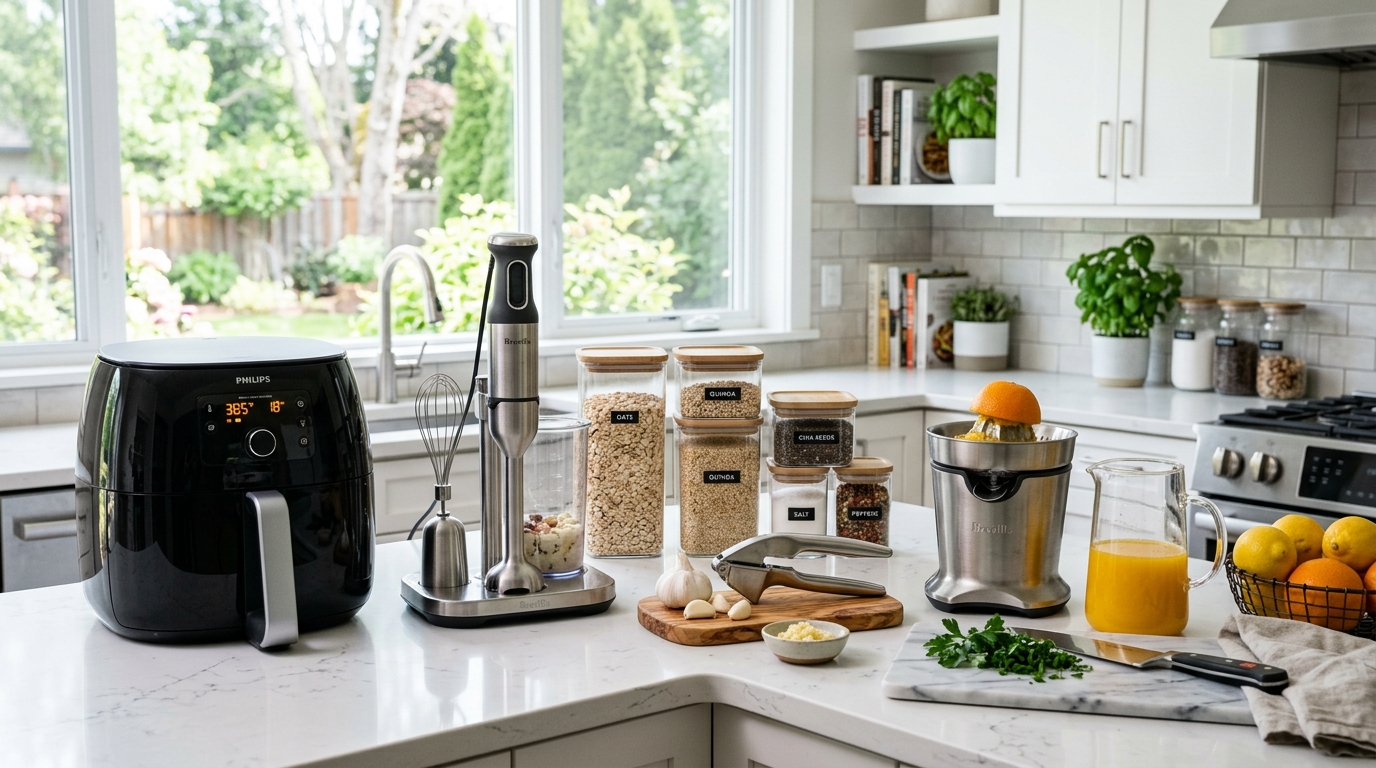
- Choose simple, durable helpers. Garlic presses, citrus juicers, immersion blenders, air fryers, pressure cookers, organizers, and bag sealers tend to deliver everyday value.
- Ask the weekly-use test. Will you use it weekly? Is it easy to clean? Is it easy to store? Will it hold up?
- Match the gadget to your kitchen. Busy home cooks and beginners often benefit most, while small-space cooks should stick with essentials over extras.
You know the pattern. A drawer won’t close because it’s full of odd tools, dinner prep takes longer than it should, and that clever little gadget you bought six months ago hasn’t moved since day two.
Most kitchens don’t need more stuff. They need kitchen essentials that reduce frustrations. The best kitchen gadgets save a few minutes, cut down on mess, or make one annoying task easier enough that you reach for them without thinking. In 2026, that practical side matters even more, especially for home cooks balancing busy family meals, faster weeknights, and less food waste. That’s the standard worth using before you buy anything.
What makes a kitchen gadget worth buying
I’ve tested enough chef-tested kitchen tools to know that “useful” and “interesting” are not the same thing. Plenty of gadgets look smart in a product photo and fall apart in real life. They take too long to clean, need too much storage, or solve a problem that barely exists.
A good tool usually passes a simple test. It should save time, reduce effort, fix a common annoyance, or help you cook more often, all while being durable for repeated use. If it doesn’t do at least one of those things in a repeatable way, it probably isn’t worth the drawer space.
A kitchen gadget is worth buying when you still want to use it on a tired Tuesday.
Start with the problem, not the product
This is where most people go wrong. They see a product first, then try to invent a reason to own it.
It works better the other way around. Think about what slows you down every week. Maybe chopping onions feels tedious. Perhaps it is leftovers that turn into clutter because nothing seals well. It could even be the three pans you keep using when one tool could cut that down. Those are real problems, and those are the problems worth solving.
If an issue shows up once a month, I usually skip the gadget. If it shows up three times a week, that’s where a small tool can earn its keep.
Look for tools that do one job really well
The best kitchen tools are often the least dramatic. They’re compact, easy to clean, and simple enough that anyone in the house can use them. A solid garlic press, a sharp peeler, or a reliable can opener won’t impress anyone, but they get used.
Bulky tools often promise too much. High-end gear from professional kitchens contrasts with home essentials, since a gadget that chops, slices, stores, and supposedly changes your life usually does none of those things especially well. In daily cooking, simple wins because simple gets used.
The kitchen gadgets that help most in real everyday cooking
Some categories show up again and again because they match how people actually cook at home. They don’t need to be fancy. They need to make regular meals less annoying.
Prep tools that speed up the boring parts
Prep work is where dinner often starts to drag. If you’re already tired, five small tasks can feel like fifteen. This is where the right gadgets help most, especially compared to relying on just a sharp chef knife and a sturdy cutting board.
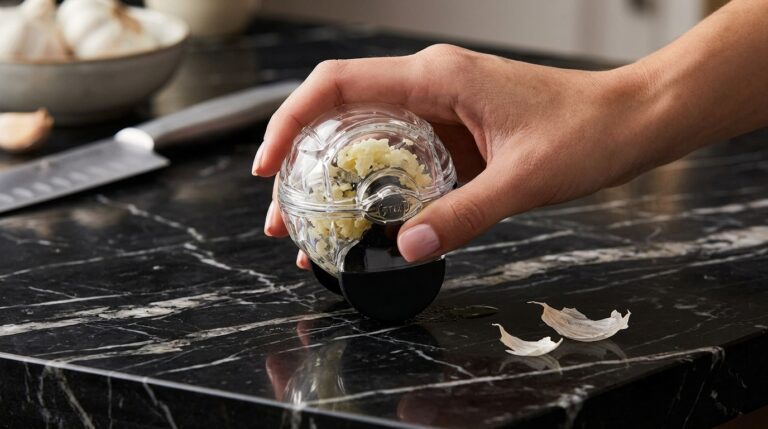
A good garlic press saves your hands and keeps sticky garlic off the cutting board. A vegetable chopper can make sense if you cook large batches of onions, peppers, or potatoes, though a food processor often handles those jobs even better with less effort. A citrus juicer is one of those small tools that seems optional until you’re squeezing lemons often enough to get tired of seeds and wasted juice. An immersion blender shines for quick soups or purees right in the pot, while kitchen shears make snipping herbs or trimming meat a breeze without dirtying your chef knife. Mandolines can be excellent for even slices, but only if they have strong safety features and you will actually use the guard.
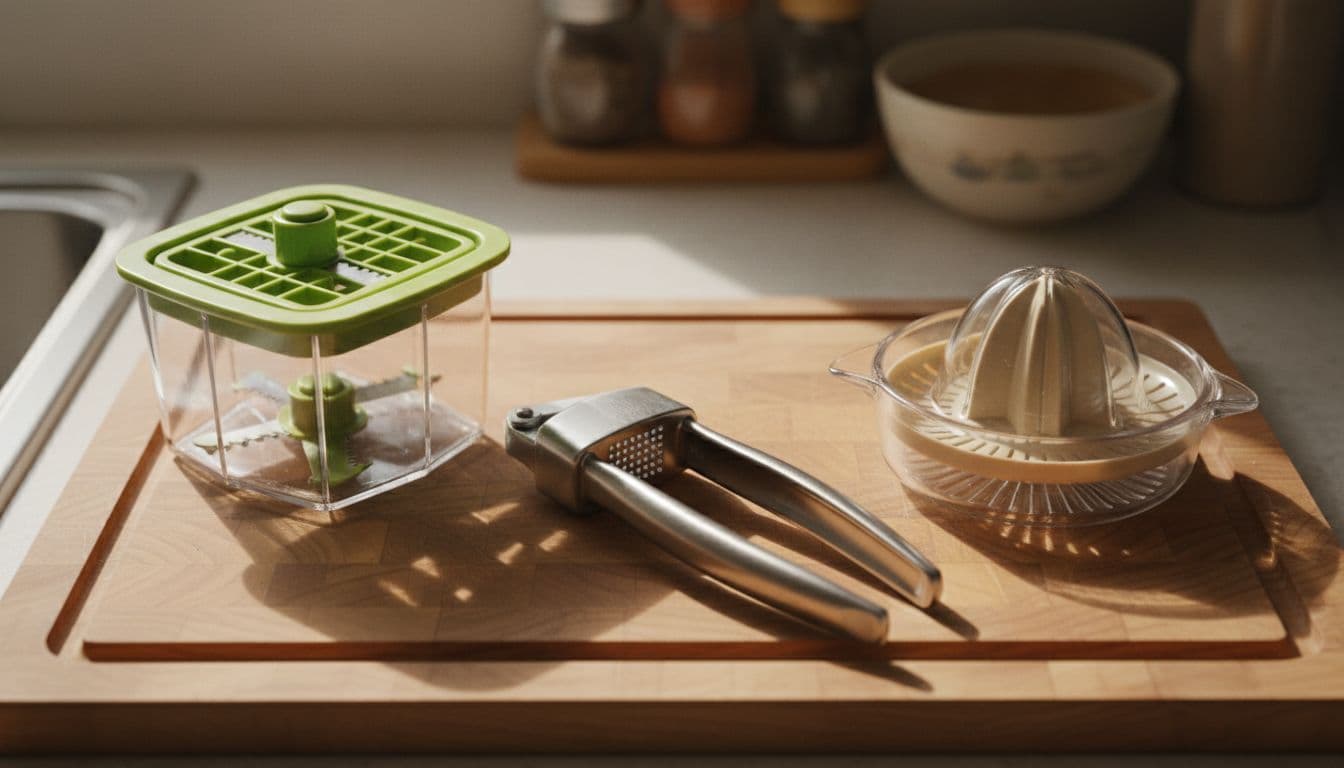
There is a catch. Some prep gadgets create extra cleanup, and that can cancel out the time saved. If you only cook once or twice a week, a chef knife and cutting board may still be the better answer. But if you cook most nights, these are the kinds of tools that can make the boring parts move faster.
Countertop appliances that save busy weeknights
Air fryers, pressure cookers, and countertop ovens are still popular in 2026 for a simple reason; these small appliances solve a weeknight problem. They cook faster, need less hands-on attention, and often combine steps you would otherwise manage separately.
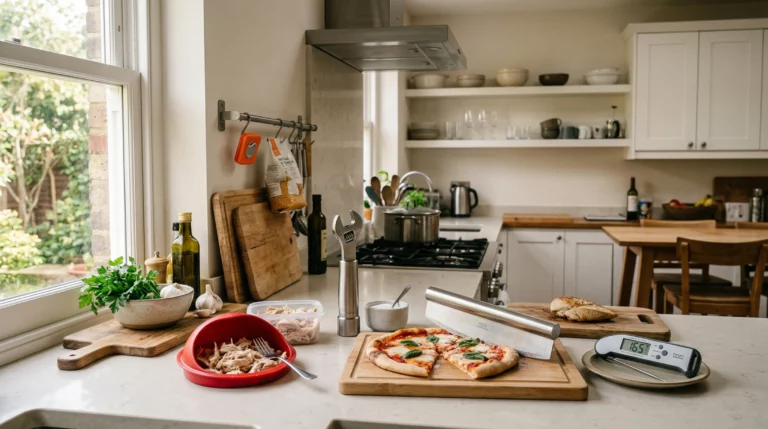
An air fryer is useful for crisping frozen foods, reheating leftovers, and cooking proteins without heating the whole oven, and pairing it with an instant-read thermometer ensures perfect doneness every time. A pressure cooker helps when you forgot to plan ahead and still want soup, rice, or shredded chicken in reasonable time, but always use an instant-read thermometer to check food safety after quick cooks. Countertop ovens work well for smaller households or anyone who cooks in short bursts through the day.
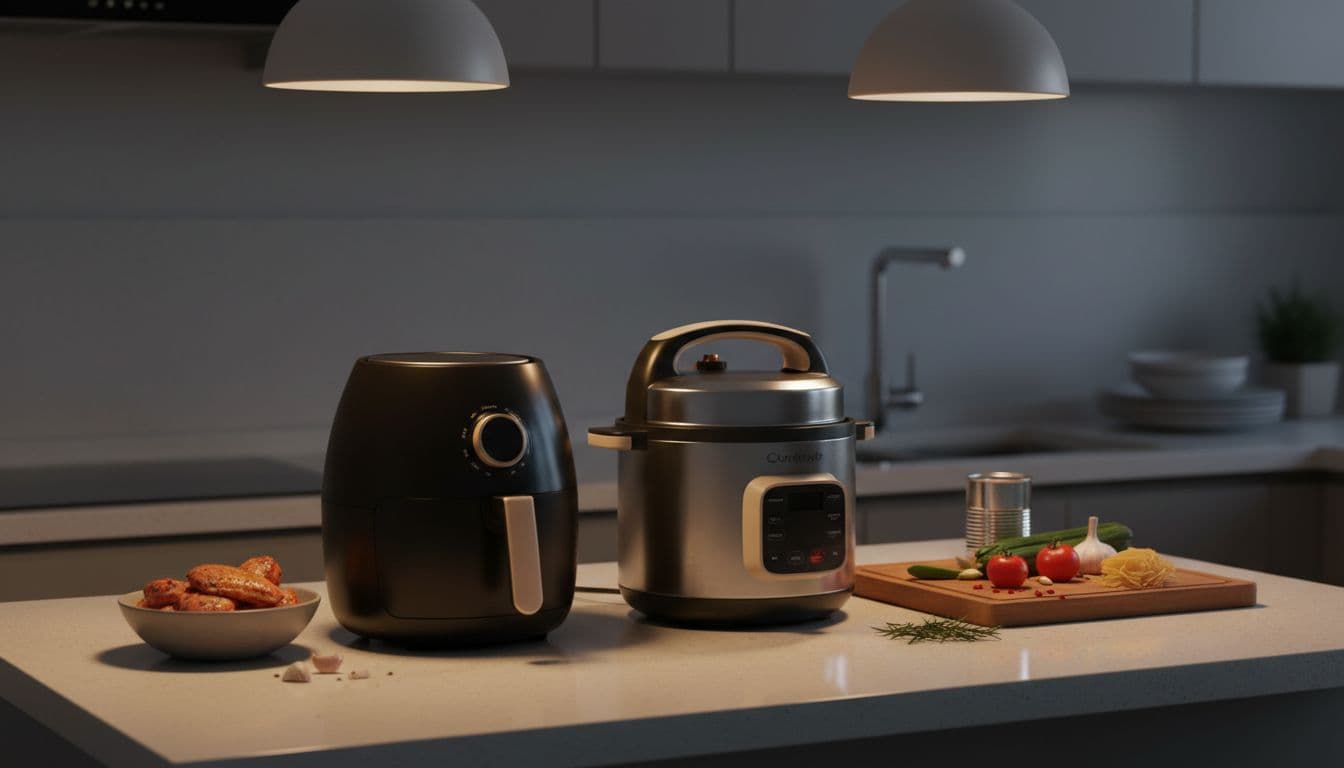
Newer models now lean harder into smart features, and some add probes or automatic settings. That can help, but I still think the basic value is speed and convenience, not the app. The main downsides are familiar: size, noise, and counter space. If an appliance has to be lifted out of a closet every time, you may stop using it.
Storage and cleanup gadgets that cut daily frustration
Not every useful kitchen gadget cooks food. Some of the most helpful ones simply make the kitchen easier to live with, especially when organizing essentials like a quality cookware set.
Oil dispensers can reduce drips and help with portion control. Bag sealers keep snacks and frozen food from going stale too fast. Stackable organizers make cabinets less chaotic, which matters more than people expect; they are perfect for nesting stainless steel saucepans, a cast iron Dutch oven, sheet pans, or even a non-stick skillet in a durable cookware set. Drawer versions keep utensils tidy, like spatulas for flipping, a whisk for sauces, and mixing bowls that nest neatly. When you can see what you have, you waste less and buy less by accident. A stand mixer is a great example of a bulky tool that needs dedicated storage space to earn its keep, alongside stainless steel pots or cast iron pans built to last. Small dish-drying helpers also help if your sink area turns into a traffic jam after dinner, and spatulas dry fast without sticking.
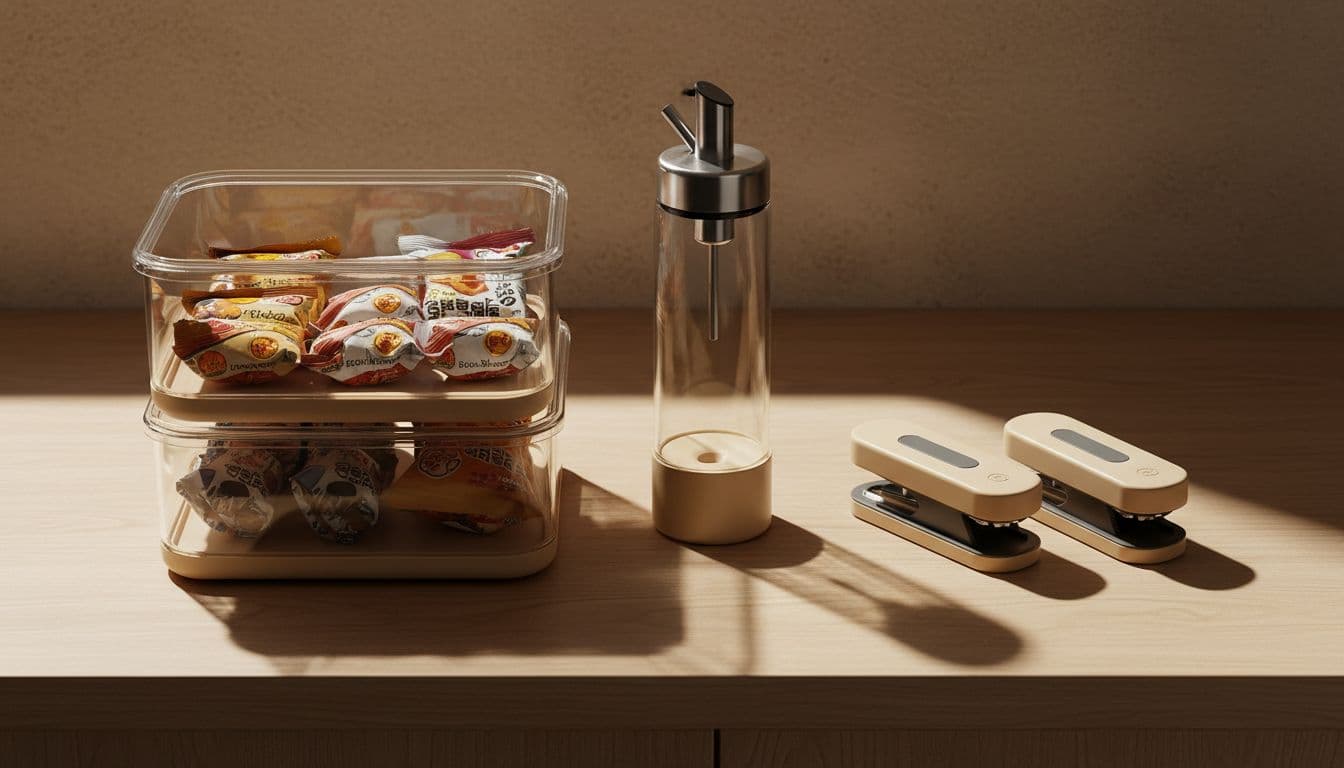
These tools don’t feel exciting, but they often improve the kitchen every single day. That’s a better kind of useful.
How to avoid wasting money on gadgets you will not use
The easiest way to waste money is to shop for your ideal cooking life instead of your real one. I’ve done it, and most people have. The product isn’t always bad. It’s often just wrong for the routine you actually have.
Ask these simple questions before you buy
Before buying any kitchen gadget, pause and ask:
- Will I use this at least once a week?
- Do I have a place to store it within easy reach?
- Is cleanup fast enough that I won’t avoid it?
- Does it feel sturdy enough to last, with stainless steel construction as a solid benchmark?
- Am I replacing a task I already handle fine with a knife, pan, or basic tool?
Those questions cut through most impulse buys. If the answer is shaky on two or three of them, I usually pass. Even low-cost essentials like measuring spoons and measuring cups deserve sturdy stainless steel builds to ensure they last. A tool that saves two minutes but adds ten minutes of washing is not helping.
Who should buy more gadgets, and who should keep it simple
Some people get real value from the right tools. Busy parents often do, especially those into meal prep. So do new cooks, meal preppers, and anyone with limited hand strength or joint pain. For them, a compact chopper, electric opener, or versatile multicooker can remove enough friction to make cooking more realistic.
Other people should be more selective. If you are a home cook with simple meals, live in a small apartment, or already have packed cabinets, every new item needs a strong reason to be there. A few well-chosen kitchen tools will beat a shelf full of almost-useful kitchen tools every time.
Frequently Asked Questions
What makes a kitchen gadget worth buying?
A good kitchen gadget saves time, reduces effort, or fixes a common annoyance in a repeatable way, like every tired Tuesday. It should be easy to clean, simple to store, and durable enough to avoid creating new problems. Skip anything that only looks clever but rarely gets used.
Which prep tools speed up everyday cooking the most?
Garlic presses, citrus juicers, immersion blenders, kitchen shears, and safe mandolines cut down the boring parts without adding extra mess. They are compact and simple, which often makes them more useful than bulky multi-choppers for home use. If you cook infrequently, a sharp knife and cutting board may still be enough.
Are countertop appliances like air fryers and pressure cookers worth the counter space?
Yes, especially for busy weeknights. Air fryers and pressure cookers can cook faster with less attention, crisp foods, or make quick meals without heating the full oven. Pair them with an instant-read thermometer for safer, better results. But if you store them away after every use, a basic oven or stovetop may serve you better.
How can I avoid wasting money on unused gadgets?
Start with a real problem first. Then ask whether you will use the gadget weekly, store it easily, clean it fast, and trust it to last longer than your current setup. Shop for your actual routine, not the imaginary version where you suddenly become a weeknight cooking wizard. Even cheap tools should have decent stainless steel quality when possible.
Who benefits most from adding kitchen gadgets?
Busy parents, meal preppers, new cooks, and people with hand limitations often benefit most from tools that reduce friction, such as choppers, prep helpers, or multicookers. Experienced minimalists and small-space cooks should focus on a few essentials instead of loading every drawer with “maybe someday” gadgets. A calmer kitchen usually comes from better tools, not more tools.
Final thoughts
The right kitchen gadgets don’t need to be clever. They need to make cooking easier, faster, or less annoying in a way you’ll notice again next week.
If a tool solves a problem you actually have, it can earn its spot. If it only looks helpful in theory, leave it on the shelf.
The calmest, smartest kitchen usually prioritizes kitchen essentials over more gadgets.
This post may contain affiliate links. If you make a purchase through these links, I may earn a small commission at no extra cost to you.