
A sour smell or a slow drain can ruin your morning. These garbage disposal maintenance tips help you stop buildup, reduce odors, and avoid clogs before they start.
A garbage disposal usually gives warning signs before it fails. The sink starts to smell sour. Water drains a little slower. The motor hums, but nothing spins.
Most of the time, the problem is not sudden failure. It’s buildup, overloaded scraps, or the wrong habits repeated for months. A disposal doesn’t ask for much, but it does respond to steady care.
Garbage disposal maintenance tips for daily use
The best maintenance routine is plain and a little boring. That is also why it works. Most disposals last longer when they get regular use, enough water, and smaller food loads.
A unit that sits unused can collect residue and moisture in all the wrong places. In real kitchens, that often means stale odors, stuck debris, or light rust over time. Regular use helps keep parts moving and food from drying inside the chamber.
Garbage disposal maintenance tips: use cold water correctly
Cold water matters more than many people think. It helps fats and grease stay firm enough to move through the system instead of smearing along the chamber and drain line.
Start the water first. Then turn on the disposal. After that, feed in scraps slowly. Once the grinding sound stops, keep the cold water running for at least 15 seconds, and up to 30 seconds for heavier loads. That short flush helps carry away the leftover bits that often turn into odor later.
Hot water has its place at the sink, but not during grinding. It can soften grease and move it only partway down the line, where it cools and sticks.
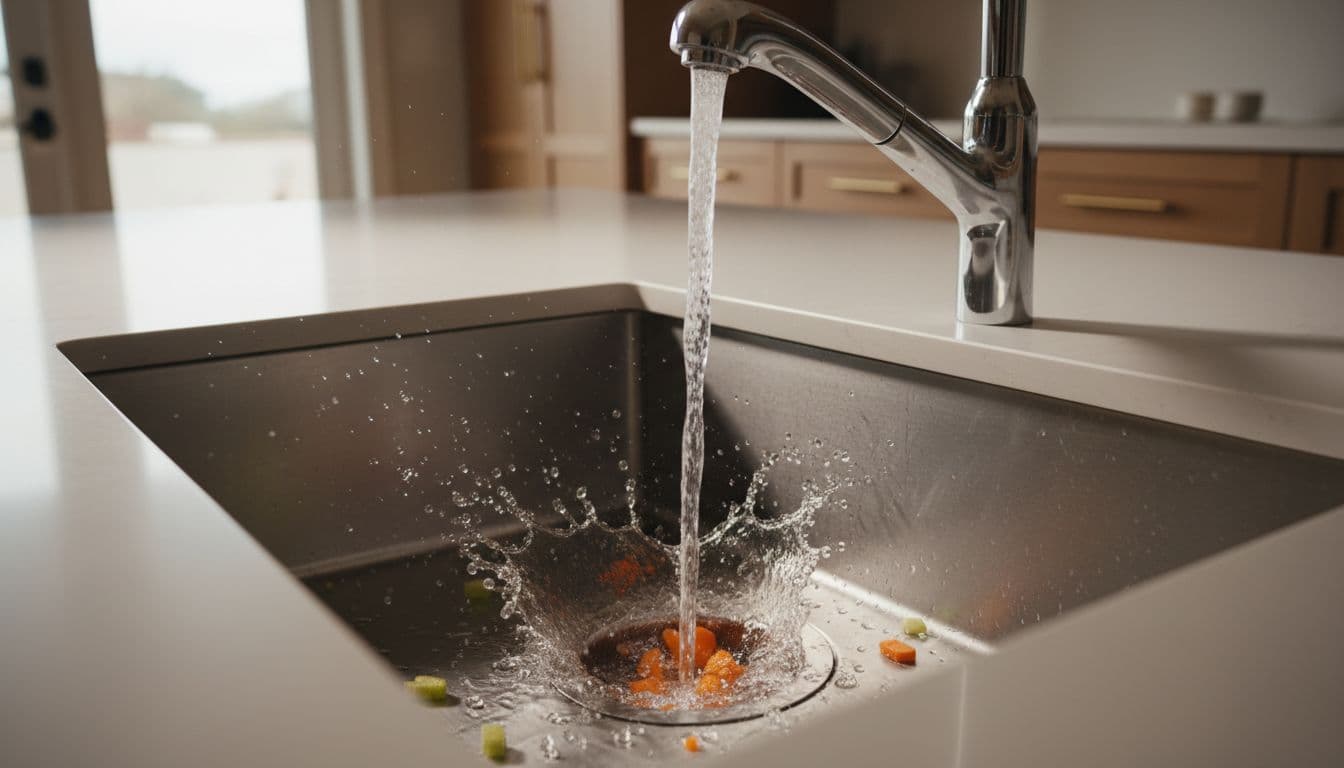
Feed scraps in small amounts and skip overloads
A disposal is built to grind food waste, but it still has limits. Stuffing in a full plate of scraps all at once strains the motor and raises the chance of a jam.
Larger scraps should be broken down first. A few chunks at a time give the unit room to work. This matters most with dense leftovers, peels, and stringy vegetable pieces. In daily use, short bursts work better than one overloaded push.
Most disposal jams start with too much food, not a weak motor.
There is another small habit that helps. Run the disposal even on days with little food waste. A quick cycle with cold water can keep residue from drying against the chamber walls.
How to clean a garbage disposal without damaging it
Cleaning a disposal is less about fancy products and more about knowing where grime hides. Many people clean the drain opening and assume the job is done. The worst smells often come from a spot they never touch.
A safe cleaning routine also means avoiding shortcuts that wear out the unit. Harsh chemicals can seem useful in the moment, yet they can damage seals, metal parts, and older plumbing.
Clean the splash guard, because that is where odors often start
The rubber splash guard, also called the baffle, traps food film on its underside. That hidden ring is one of the most common sources of bad smells.
Turn off the power first, either by unplugging the unit or switching off the breaker. Then lift the folds of the guard and scrub underneath with dish soap and a brush. A stiff bottle brush works well because it reaches the creases without much effort.
This step should happen about once a week. In many homes, it makes a bigger difference than anything poured down the drain.
Use ice, baking soda, and citrus for a simple monthly deep clean
Follow these garbage disposal maintenance tips
For a deeper clean, a modest routine works well. Drop in a handful of ice cubes, then add a little rock salt or baking soda. Run cold water and turn on the disposal for a short burst.
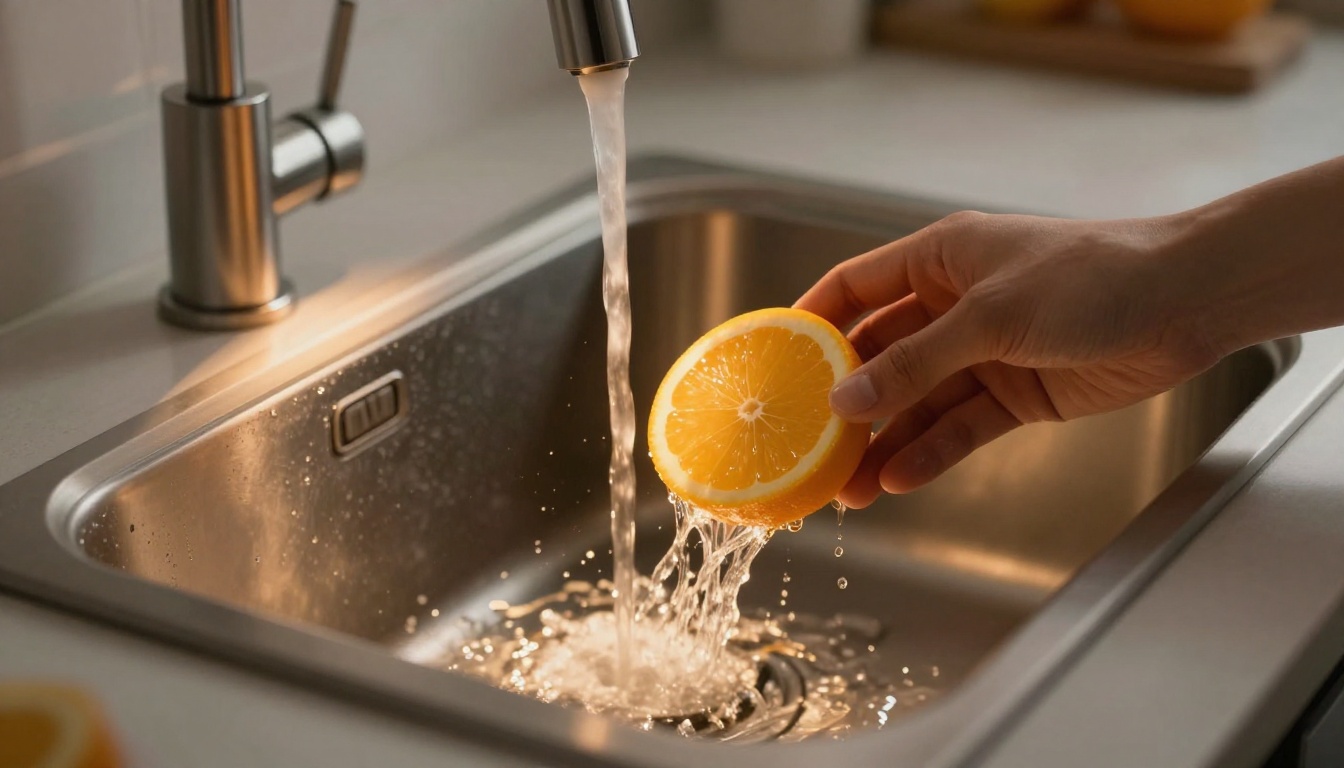
The ice helps knock loose residue. The salt or baking soda adds mild abrasion and odor control. After that, a few citrus peels can freshen the smell. Lemon is common, though orange peels work too.
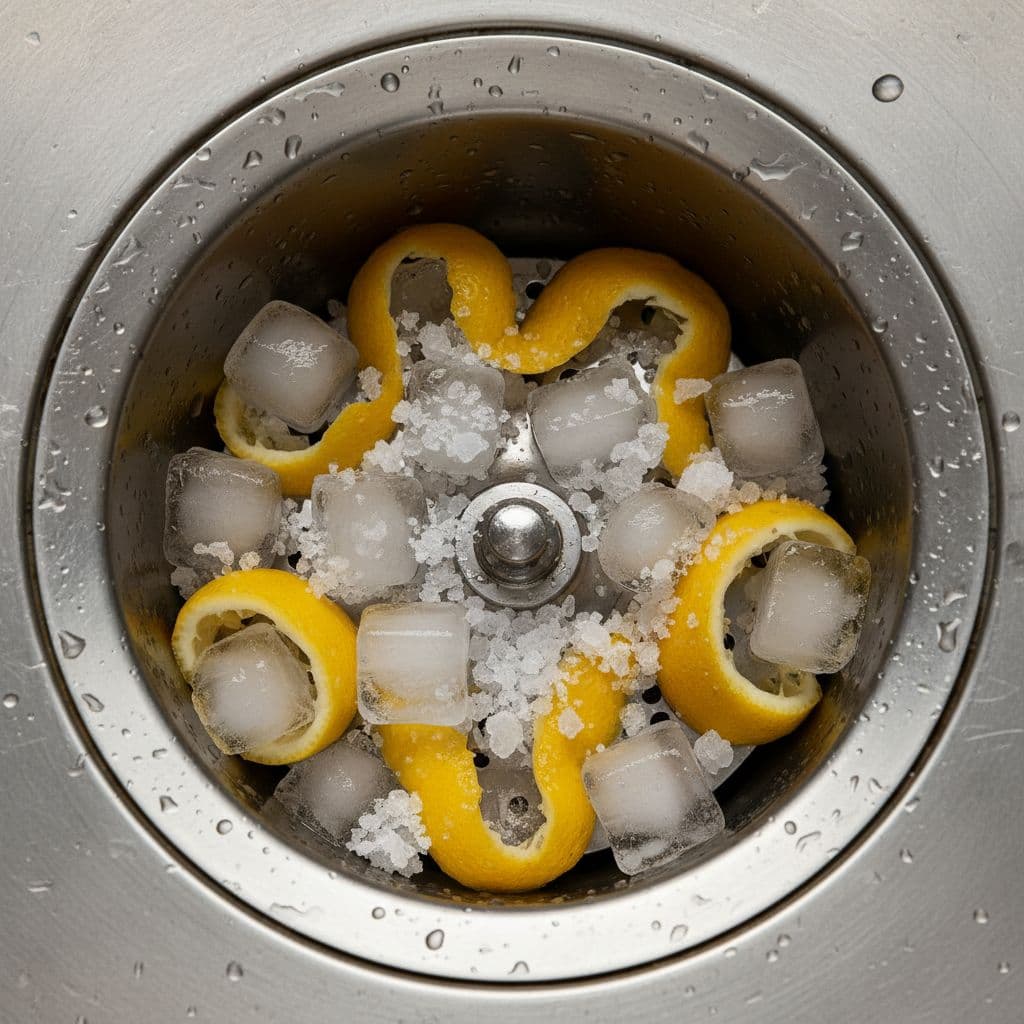
This method helps with buildup, but it is not magic. It won’t clear a real blockage, and it won’t fix a worn-out unit.
Skip chemical drain cleaners and other harsh fixes
Some chemical drain cleaners are a poor match for garbage disposals. They can damage seals and corrode parts, especially in older units. They also sit in the chamber longer than many people realize. If you want a suggestion that will work and not harm your disposal, check out Glisten.
For light odor or mild residue, baking soda and vinegar may help a little. Still, they are limited. If the sink drains slowly again and again, the issue may be farther down the pipe, where a disposal cleaner won’t reach.
That is the dividing line. Surface grime and light buildup respond to routine cleaning. Repeat clogs usually point to food misuse, pipe buildup, or a mechanical issue.
What should never go down the disposal, and what to do when it acts up
Most disposal trouble starts with the same repeat offenders. Some foods wrap around moving parts. Others turn into paste. A few simply don’t belong there at all.
Avoid grease, fibrous scraps, starches, bones, and coffee grounds
Grease and oil are frequent causes of trouble because they coat pipes. Even when they look harmless in liquid form, they cool and cling later.
Fibrous scraps are another common problem. Celery, corn husks, onion skins, and artichoke leaves can wrap around internal parts and create jams. Starches cause a different mess. Pasta, rice, and potato peels swell with water and turn gummy fast.
Bones and shells are too hard for many household units. Coffee grounds seem small, but they gather into dense sludge in the drain. Non-food items, of course, should never go in.
A short reference helps keep the risk clear:
| Material | Why it causes trouble |
|---|---|
| Grease and oil | Coats pipes and traps debris |
| Celery, corn husks, onion skins | Wraps around parts and jams the unit |
| Pasta, rice, potato peels | Swells into a paste-like mass |
| Bones and shells | Can jam or damage the disposal |
| Coffee grounds | Builds up as heavy sludge |
The pattern is simple. If it swells, wraps, hardens, or coats, it stays out.
Try the reset button and jam key before calling a plumber
When a disposal will not start, or only hums, the first step is safety. Cut power first. Unplug the unit if possible. If it is hardwired, switch off the breaker.
Then check the red reset button on the underside of the disposal. If the motor overheated, that button may restore power after a brief cool-down. If the unit still hums, use the hex wrench in the bottom slot and turn it back and forth to free the jam.

Never put a hand inside the disposal. If something visible needs to come out, use tongs or pliers.
A humming disposal often has a jam, not a dead motor.
Leaks from the body of the unit, repeat clogs, or ongoing electrical problems usually need a plumber. At that point, home maintenance has reached its limit.
A garbage disposal lasts longer when the routine stays simple: cold water, small loads, regular cleaning, and better judgment about what goes in. The expensive failures often build slowly from old grease, hidden grime, and small jams ignored too long.
That is what makes disposal care less glamorous than replacement, and more useful. Most units do not break all at once. They wear down by accumulation, one careless rinse at a time.
This post may contain affiliate links. If you make a purchase through these links, I may earn a small commission at no extra cost to you.
garbage disposal maintenance FAQ
1) What is the best way to prevent garbage disposal clogs?
The best way is simple: run cold water, feed scraps slowly, and avoid overloading. Also, skip grease, fibrous scraps, and starches, because those are the most common causes of clogs.
2) Why does my garbage disposal smell bad even after I run water?
Odors often start at the splash guard (the rubber baffle), where food film and grime collect underneath. Cleaning that area weekly usually helps more than only cleaning what you can see at the drain opening.
3) Can I use hot water to clean a garbage disposal?
Hot water can help at the sink, but it is not the best choice during grinding. Cold water helps keep grease solid so it can move through. After grinding stops, continue running cold water for about 15 to 30 seconds to flush leftover bits.
4) How often should I clean my garbage disposal?
A quick clean of the splash guard area once a week is a strong habit. For a deeper clean, do an ice and baking-soda (or salt) routine about once a month.
5) What should never go down a garbage disposal?
Do not put grease or oil, fibrous scraps like celery or corn husks, starches like pasta or rice, bones or shells, and coffee grounds in the disposal. These items can coat pipes, wrap around parts, swell into paste, or cause jams.
6) What should I do if the garbage disposal hums but won’t start?
First, cut power (unplug it or switch off the breaker). Then check the red reset button on the underside. If it still hums, use the jam wrench/hex opening at the bottom slot (without putting your hand inside). If it leaks, keeps clogging, or has ongoing electrical issues, call a plumber.